
A large amount of advertisers still build campaigns based on simple ideas:
Launch ads. Generate leads. Get sales.
Customer journeys are not the same anymore.
Today, people discover brands through multiple touchpoints. They see ads, watch videos, visit websites, compare options, leave, return later, and sometimes purchase weeks after their first interaction.
Yet many businesses still treat every prospect exactly the same.
For this reason, most campaigns fail.
A first-time visitor should not see the same message as a returning prospect. Someone who already engaged with your brand should not be treated the same way as someone who has never heard of you.
That is why customer lifecycle marketing ads have become increasingly important.
Instead of treating audiences as one large group, lifecycle marketing helps advertisers understand where people are in their buying journey and deliver the right message at the right time.
Combined with modern attribution updates, this approach allows businesses to make significantly better advertising decisions.
Why Customer Lifecycle Marketing Matters More Than Ever
People are becoming more updated day by day, and their behavior patterns are changing as well.
They research more.
They compare more.
And they rarely convert after a single interaction.
This means businesses can no longer rely on broad messaging for everyone.
A person who has never heard about your brand needs education.
A person comparing solutions needs trust.
A person ready to purchase needs confidence and clarity.
When advertisers ignore these differences, campaigns become inefficient.
The result is usually :
- higher acquisition costs
- lower conversion rates
- wasted budget
- poor audience experience
A strong customer lifecycle strategy solves this problem by aligning marketing messages with audience intent.
The Problem With Treating Every Customer the Same
One of the most common mistakes in Meta advertising is sending all traffic into the same campaign structure.
What almost every advertiser does is they only focus on acquisition.
Acquisition is just a stage of the overall process.
New customers discovering your brand requires multiple communications than someone who already visited your website for several times.
When campaigns ignore customer stages, performance often suffers because the message does not match intent.
How Buyer Journeys Have Changed
Modern buying decisions are rarely linear.
A customer may :
- discover a brand through Meta
- visit a website
- leave without converting
- see a retargeting ad
- read reviews
- return later
- purchase weeks afterward
This journey creates multiple touchpoints.
And understanding those touchpoints is where lifecycle marketing becomes powerful.
What Is Customer Lifecycle Marketing?
Customer lifecycle marketing is a marketing process where audiences stay organized based on their position in the buying journey.
Instead of showing everyone the same message, marketers create experiences that match audience intent.
This creates a more relevant customer experience and often improves advertising performance.
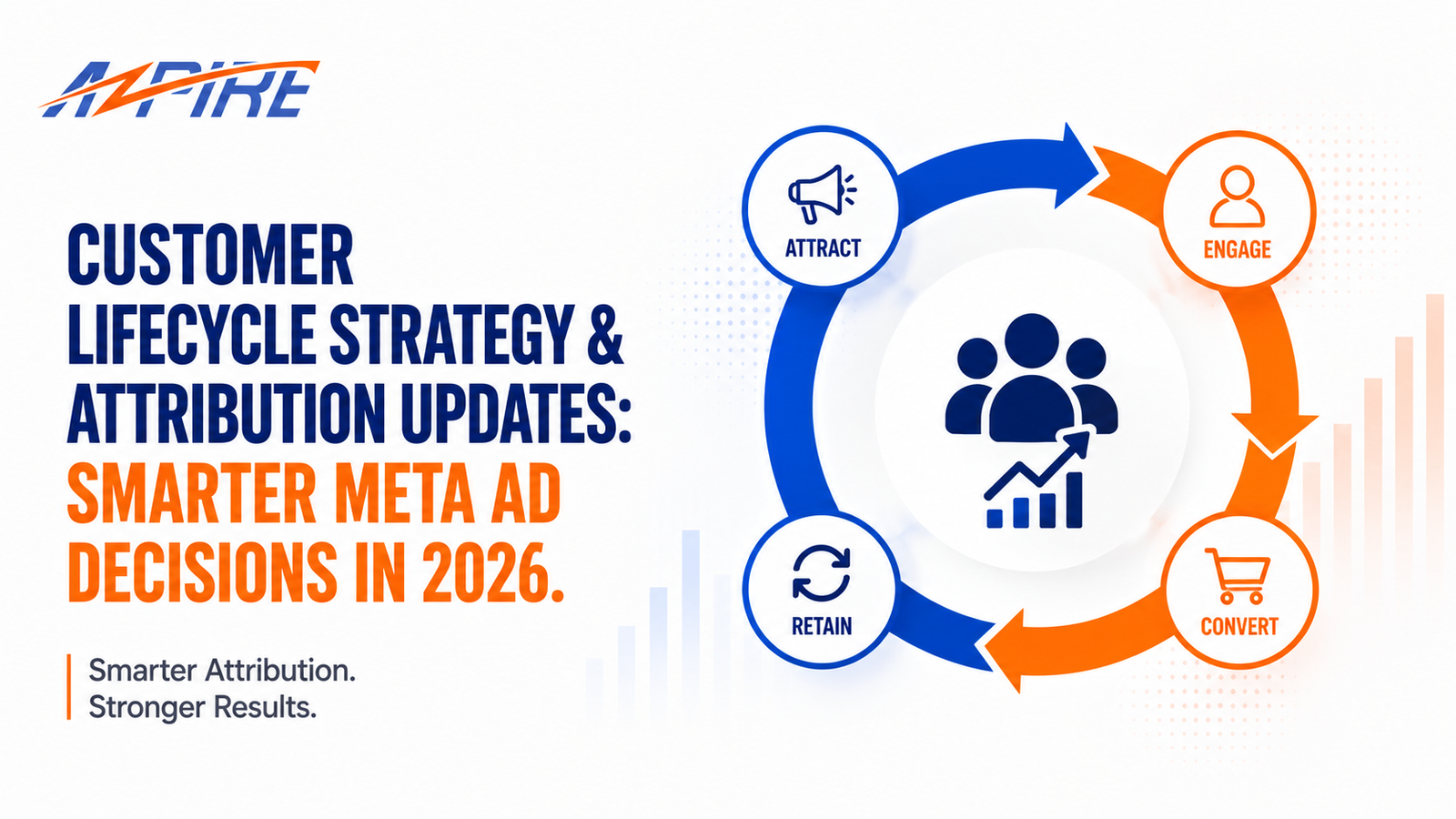
Awareness Stage
This is where people first discover your brand.
The goal is not immediate conversion.
The goal is :
- attention
- education
- awareness
- trust building
At this stage, creative content often performs better than direct sales messaging.
Consideration Stage
The audience now understands the problem and begins comparing options.
This stage focuses on :
- benefits
- differentiation
- proof
- education
Many advertisers lose potential customers here because they continue running awareness-style messaging.
Conversion Stage
The prospect is ready to make a decision.
At this point :
- testimonials
- case studies
- offers
- urgency
often become more important than educational content.
The goal is removing friction and increasing confidence.
Retention Stage
Many businesses stop marketing after the sale.
That is a mistake.
Retention often generates the highest long-term profitability.
Existing customers already trust the brand.
The focus shifts toward :
- repeat purchases
- upsells
- referrals
- customer loyalty
Why Attribution Updates Are Changing Campaign Decisions
Understanding attribution is becoming just as important as understanding audiences.
Many advertisers still believe conversions happen because of the last click.
Modern attribution systems tell a very different story.
Most conversions involve multiple touchpoints before a final purchase.
Attribution helps marketers understand how those touchpoints influence decisions.
The Decline of Traditional Attribution
Older attribution models often gave all credit to the final interaction.
But customer journeys are now much more complex.
People interact with :
- Meta Ads
- Google Search
- email campaigns
- videos
- websites
before making a purchase.
Attributing everything to the final click often creates misleading insights.
How Meta Uses Attribution Today
Meta increasingly relies on machine learning and behavioral modeling.
Instead of looking only at direct actions, the platform attempts to understand how different interactions contribute to eventual conversions.
This is why many advertisers notice attribution updates affecting reporting.
The platform is becoming better at measuring influence rather than only direct clicks.
What Advertisers Often Misunderstand
Many businesses optimize campaigns using incomplete data.
They pause campaigns too quickly.
They underestimate upper-funnel activities.
And they often fail to understand how awareness campaigns influence future conversions.
Attribution is not perfect.
But it provides valuable context that helps marketers make smarter decisions.
How Lifecycle Strategy Improves Meta Ads Performance
A lifecycle-focused campaign structure performs better than traditional approaches as it aligns messaging with customer intent.
Instead of treating everyone the same, campaigns become more personalized.
Better Audience Segmentation
Different audiences have different needs.
Lifecycle segmentation allows advertisers to :
- create more relevant messaging
- improve engagement quality
- strengthen conversion signals
This often leads to better optimization performance.
Smarter Budget Allocation
Not every stage deserves the same budget.
Awareness campaigns build future demand.
Conversion campaigns capture existing demand.
Retention campaigns maximize customer value.
A lifecycle approach helps allocate resources more strategically.
Higher Conversion Efficiency
When the message matches audience intent, conversion efficiency often improves.
This is one reason why many advertisers combine lifecycle frameworks with predictive targeting ads and broader audience optimization systems.
Customer Lifecycle vs Traditional Campaign Thinking
Traditional advertising often focuses on campaigns.
Lifecycle marketing focuses on customers.
That difference matters.
A campaign may end after thirty days.
A customer relationship may continue for years.
Long-term growth comes from how well customer journeys are being managed, not just campaign metrics.
This mindset shift often creates better results than any single targeting tactic.
Why This Matters More in APAC Markets
Customer behavior across APAC markets often differs from mature Western markets.
Trust usually takes longer to build.
People often compare multiple options before making decisions.
And customer journeys can involve many touchpoints.
This makes lifecycle marketing particularly valuable.
Shorter Attention Cycles
Competition for attention continues to increase.
Brands are now communicating more clearly & consistently than ever before.
Lower Trust Before Purchase
Many consumers require multiple interactions before taking action.
This makes awareness and consideration stages extremely important.
The Role of Stable Infrastructure
Even the best lifecycle strategy struggles when campaign delivery becomes unstable.
This is why many advertisers rely on ecosystems like Azpire and their stable ad account infrastructure to maintain consistent campaign performance across markets.
Building a Customer Lifecycle Strategy in 2026
A successful lifecycle marketing strategy must be easy to understand.
But it does require structure.
Start by identifying customer stages.
Then create content and campaigns designed for each stage.
Finally, use attribution insights to understand how those stages influence overall performance.
Lifecycle marketing becomes more effective when it stays combined with both AI-driven campaign optimization and AI creative optimization.
Because now the system understands not only who the customer is—but also where they are in their journey.
Final Thoughts
The future of advertising is not about reaching more audiences.
It is about understanding them in a better way.
Customer lifecycle marketing helps advertisers to deliver the right message to the right audience at the perfect time of their buying journey.
Attribution updates help reveal how customers actually move through the buying journey.
These two concepts create a more effective & smarter framework for growth.
Over the next few years, spending more on advertising alone won’t be enough.
The real advantage will belong to businesses that understand their customers’ journey better than their competitors do.
FAQ
What are customer lifecycle marketing ads?
Customer lifecycle marketing ads are campaigns designed around different stages of the customer journey, including awareness, consideration, conversion, and retention.
Why is customer lifecycle marketing important?
It improves audience relevance, strengthens engagement, increases conversion efficiency, and helps marketers deliver the right message at the right time.
What is an attribution update?
An attribution update changes how advertising platforms measure and assign credit to marketing interactions that influence conversions.
How does lifecycle marketing improve Meta Ads?
Lifecycle marketing improves targeting, audience segmentation, messaging relevance, and budget allocation across different customer stages.
Can small businesses use customer lifecycle marketing?
Yes. Even simple lifecycle segmentation can help businesses create more relevant campaigns and improve advertising performance.